




601 N Craycroft Rd
Tucson, AZ 85711

Red Light Therapy for Pain Relief & Recovery
Red Light Therapy Tucson
Arizona Chiropractic Tucson >> Treatments >> Red Light Therapy
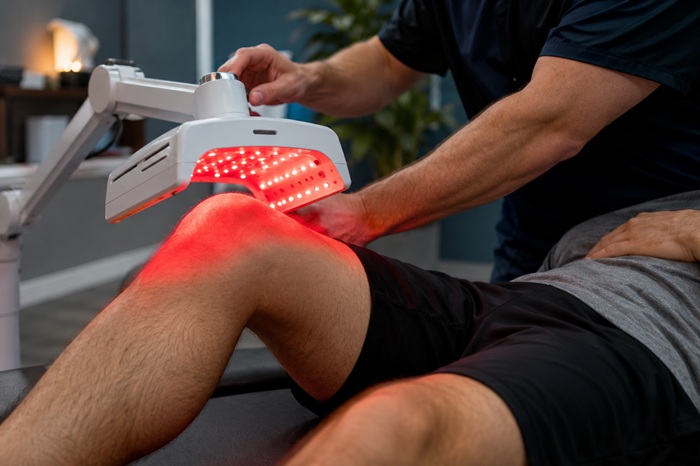
Full-body red and near infrared light therapy in Tucson, used to support recovery, reduce inflammation, and help your body heal at the cellular level.
Some days the pain is not the problem. The problem is that you are healing slower than you used to. Workouts take longer to recover from, an old injury flares up for no clear reason, and you are tired in a way that sleep does not fix.
Red light therapy works on that layer. At Arizona Chiropractic and Spine Rehabilitation, Dr. David Heaton uses full-body red and near infrared light as a recovery tool alongside chiropractic adjustments and rehabilitation, not as a standalone gadget. Sessions take about 10 to 20 minutes, there is no downtime, and nothing about it hurts.
- Supports faster tissue recovery
- Helps calm inflammation and soreness
- No needles, no heat damage, no downtime
- Pairs with your existing care plan
What Is Red Light Therapy?
Red light therapy, also called photobiomodulation, uses specific wavelengths of red and near infrared light delivered to the skin at a low intensity. The light does not burn or cut. It passes into the tissue and is absorbed by the mitochondria, the part of your cells that produces energy.
When mitochondria absorb that light, they produce more ATP. ATP is the fuel your cells run on. Cells with more available energy repair themselves faster, clear waste more efficiently, and manage inflammation better. That is the entire mechanism, and it is why one therapy shows up in research on so many different problems. You are not treating a symptom. You are giving the tissue more capacity to do its own repair work.
Two wavelength ranges do most of the work, and they reach different depths.
How Deep Each Wavelength Reaches
Approximate penetration depth by wavelength range.
Our system delivers both ranges at once, which is why it is used for surface concerns and deeper musculoskeletal recovery in the same session.
What Do Tucson Patients Use Red Light Therapy For?
Most people who ask us about red light therapy fall into one of a few groups. Here is what they come in for and what the therapy is actually doing in each case.
| What Brings You In | What Red Light Therapy Supports |
|---|---|
| Lingering joint and muscle pain | Reduced inflammation and improved circulation in the treated area, often used alongside care for back pain, knee pain, and shoulder pain |
| Slow recovery after injury | Faster soft tissue repair and better tolerance for rehabilitative exercise between visits |
| Training and athletic recovery | Less post-workout soreness and quicker turnaround between hard sessions, common with sports injuries |
| Stiffness and reduced range of motion | Warmer, more pliable tissue going into an adjustment, which is why many patients schedule light therapy before their adjustment |
| Low energy and poor sleep quality | Patients frequently report better sleep and daytime energy, likely tied to circadian and mitochondrial effects |
| Skin tone and appearance | Collagen production in the skin, which is where most of the cosmetic research on red light sits |
Red light therapy is not a cure for any of these. It is a support therapy that gives your body better conditions to heal in. Dr. Heaton will be straight with you about whether it belongs in your plan or whether something else should come first.
Red Light Therapy vs. Cold Laser Therapy: What Is the Difference?
This is the question we get most often, because both use light and both are non-invasive. The difference is coverage and precision.
| Red Light Therapy | Cold Laser Therapy | |
|---|---|---|
| Light source | LED panels covering a wide area | Focused laser from a handheld device |
| Coverage | Full body or a large region | One specific spot at a time |
| Best for | Systemic recovery, general inflammation, energy, whole-body wellness | A pinpointed injury such as plantar fasciitis or a specific joint |
| Session length | About 10 to 20 minutes | Three to five minutes on the target area |
| Typical use | Ongoing recovery and maintenance | Focused treatment of an active injury |
Neither one replaces the other. Plenty of our patients use both, with infrared cold laser therapy aimed at the problem area and full-body red light supporting overall recovery. If you are not sure which one your situation calls for, that is exactly what the consultation is for.
What Happens During a Red Light Therapy Session?
There is very little to it, which surprises most first-time patients.
- You get positioned. You will be seated or lying in front of the light array with the treatment area exposed. Light has to reach skin to do anything, so clothing over the target area comes off.
- Eye protection goes on. The light is not damaging, but it is bright. Goggles keep it comfortable.
- The session runs 10 to 20 minutes. You will feel gentle warmth and nothing else. No stinging, no pressure, no sensation of the light working.
- You get up and go. No recovery period, no restrictions, no aftercare. Most patients pair it with their adjustment and are in and out on a normal visit schedule.
If you have ever wondered whether it is working during the session, you are not alone. Red light therapy produces almost no sensation. The changes happen at the cellular level over days and weeks, not in the moment.
How Many Sessions Will I Need?
Red light therapy is cumulative. One session will not change much. Consistency is what produces results, which is why Dr. Heaton builds it into a schedule rather than selling one-off visits.
| Phase | What It Looks Like |
|---|---|
| Starting out | 3 to 5 sessions per week for the first few weeks |
| Session length | About 10 to 20 minutes |
| First noticeable changes | Often within 2 to 4 weeks, sooner for soreness and recovery |
| Maintenance | 1 to 3 sessions per week once you reach your goal |
Your actual schedule depends on what you are working on. Recovery from an acute injury looks different from long-term wellness maintenance, and Dr. Heaton adjusts as your progress is tracked.
Try It First: The $47 Red Light Discovery Session
You should not have to commit to a package to find out whether something works for your body. That is why we offer a full introductory session at a price that makes trying it easy.
A Complete Introduction to Our Recovery Systems
A full experience of red light therapy and recovery at Arizona Chiropractic and Spine Rehabilitation with Dr. David Heaton.
- 3D body scan to assess your body composition and establish a baseline
- Personal consultation to understand your goals and concerns
- Full-body infrared and near infrared light therapy session
- Vibration platform session to support circulation and recovery
Promo code: RED47
The 3D body scan matters more than it sounds. It gives you an objective starting point, so six weeks from now you are not guessing whether anything changed. You can see it.
Who Is a Good Candidate for Red Light Therapy?
Red light therapy is well tolerated by most people. It tends to be a good fit if you are:
- Recovering from an injury
- Dealing with ongoing joint or muscle pain
- Training hard and recovering slowly
- Looking for a drug-free recovery option
- Already under chiropractic care
- Focused on long-term wellness
Tell us first if any of these apply to you. Red light therapy is generally very safe, but a few situations call for a conversation before starting: pregnancy, a history of skin cancer or an active cancer diagnosis, seizure disorders triggered by light, or any medication that causes photosensitivity. Some antibiotics, acne medications, and diuretics fall into that last category.
Bring your full medication list to your consultation. Dr. Heaton will review it with you and tell you honestly if this is not the right therapy for your situation.
Why Get Red Light Therapy at a Chiropractic Clinic?
You can buy a red light panel online and use it at home. Plenty of people do, and for general wellness that is a reasonable option.
The difference here is context. When light therapy sits inside an actual treatment plan, someone is evaluating why your tissue is not recovering in the first place. A joint that keeps flaring up may be a mobility problem, a compensation pattern from an old auto injury, or a work injury that never fully resolved. Light therapy alone will not fix the mechanics underneath.
At our Tucson clinic, Dr. Heaton uses objective progress tracking and 3D body scanning so you can see whether your plan is working instead of relying on how you happen to feel that week. Red light therapy is one tool in that plan. It works best when it is aimed at something specific.
Red Light Therapy Frequently Asked Questions
Does red light therapy hurt?
No. Most patients feel gentle warmth and nothing else. There are no needles, no incisions, and no burning. If a session ever feels uncomfortably hot, tell us and we will adjust the distance or duration.
How long before I notice a difference?
Soreness and recovery changes often show up within the first week or two. Deeper changes in pain levels, sleep, and skin generally take four to eight weeks of consistent sessions. Red light therapy is cumulative, so a single session is not a fair test of whether it works for you.
Is red light therapy safe?
For most people, yes. It is non-invasive, does not use UV light, and does not damage skin the way tanning beds do. Talk to Dr. Heaton first if you are pregnant, have an active cancer diagnosis or history of skin cancer, have a light-triggered seizure disorder, or take any medication that causes photosensitivity.
Is this the same thing as a tanning bed?
No, and the difference matters. Tanning beds emit ultraviolet light, which damages skin cells. Red light therapy uses red and near infrared wavelengths, which sit at the opposite end of the spectrum and carry no UV exposure. You will not tan or burn.
Can I combine red light therapy with chiropractic adjustments?
Yes, and many patients do exactly that. Light therapy before an adjustment can leave tissue warmer and more pliable. Used after, it supports recovery between visits. Dr. Heaton will tell you which order makes sense for your plan.
Where in Tucson are you located?
We are at 601 N Craycroft Rd, Tucson, AZ 85711, serving patients across Tucson and the surrounding communities. Call (520) 600-3300 to check availability.

Are you ready for a Better Life?
If pain, injury, or limited movement is slowing you down, we'd love to help. At Arizona Chiropractic & Spine Rehabilitation, Dr. Heaton makes it simple to get the care you need and start your path toward real recovery.

At Arizona Chiropractic in Tucson, our mission is not only to help you recover from pain, but also to educate and empower you with the tools to maintain long-term health and wellness.
Quick links
Office Hours
Monday | 8AM - 6PM
Tuesday | 8AM - 6PM
Wednesday | 8AM - 6PM
Thursday | 8AM - 6PM
Friday | 9AM - 1PM
Saturday & Sunday | Closed
Get In Touch
601 N Craycroft Rd
Tucson, AZ 85711
Copyright © 2026 Arizona Chiropractic & Spine Rehabilitation