




601 N Craycroft Rd
Tucson, AZ 85711

How Chiropractic Care Can Be a Lifesaver After an Auto Accident
Chiropractic Care in Tucson
Most people who walk away from a car accident without broken bones assume they are fine. That assumption is one of the most common reasons people end up with chronic pain they never fully recover from. The injuries that happen in a collision are often invisible at first, and the window for treating them effectively is shorter than most people realize.
Here at our auto accident chiropractic clinic in Tucson, AZ, Dr. David Heaton has worked with hundreds of patients who came in days, weeks, or even months after a crash, dealing with pain that never resolved on its own. This article explains why chiropractic care after an auto accident is not just helpful but often the difference between a full recovery and a lifetime of ongoing symptoms.
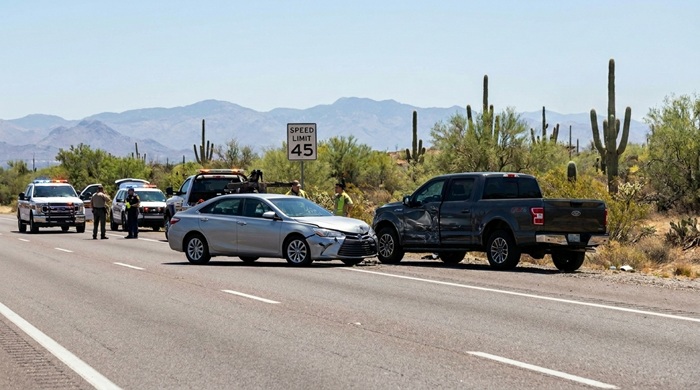
The Injuries Nobody Talks About After a Crash
Emergency rooms are built to identify life-threatening problems. Fractures, internal bleeding, traumatic brain injury. If you leave the ER with a clean scan, that is genuinely good news. But it does not tell you what happened to your soft tissues, your spinal joints, or your nerve pathways.
The most common injuries from car accidents are soft tissue injuries. These are damage to muscles, tendons, ligaments, and the connective tissue that holds your spine together. They do not show up on X-rays. They do not always produce immediate pain. And they are exactly what chiropractic care is designed to find and treat.
Here are the injuries that show up most often after a collision:
- Whiplash — The most common auto accident injury. A rapid forward-and-back motion of the neck strains or tears the muscles and ligaments of the cervical spine. Symptoms can take 24 to 72 hours to fully develop and often feel like general stiffness before the real pain begins.
- Neck pain and stiffness — Connected to whiplash but can also result from compressed cervical discs or facet joint injury. Reduced range of motion and morning stiffness are common early signs.
- Back pain — The lumbar and thoracic spine absorb enormous stress during a collision, even at low speeds. Disc injuries, joint sprains, and muscle strains can develop from impact forces the body was not braced for.
- Headaches — Post-accident headaches are almost always structural in origin. They typically come from tension in the upper cervical spine, not from stress or anxiety. They respond well to chiropractic care targeting the source.
- Sciatica — A collision can shift or herniate a lumbar disc, which then compresses the sciatic nerve. Shooting pain down the leg, sometimes without significant low back pain, is a common presentation that people do not initially connect to the accident.
- Shoulder pain — The seatbelt, airbag deployment, and bracing against the steering wheel can all cause shoulder strain or rotator cuff damage that develops into persistent pain if not treated.
- Dizziness and vertigo — Inner ear disruption and upper cervical misalignment can both cause dizziness after a crash. It is often dismissed as anxiety or a side effect of medication when it is actually a structural problem with a clear treatment path.
- Concussion — Even without a direct head impact, the rapid deceleration of a crash can cause brain trauma. Symptoms include headache, brain fog, light sensitivity, and mood changes, and they can persist for weeks or months without proper care.
- Hand numbness and tingling — Nerve irritation in the cervical spine following a crash can produce numbness, tingling, or weakness in the hands and fingers, a sign that the injury has affected nerve function and needs prompt attention.
During a collision, your body floods with adrenaline and cortisol. These hormones suppress pain signals as part of a survival response. This is why so many people feel fine immediately after a crash and then wake up the next morning unable to turn their head. The injury was there from the moment of impact. The pain just took time to surface.
What Happens When You Do Not Get Treated
The body does not simply heal itself after a soft tissue injury the way a cut heals. Without proper treatment, several things happen that make the original injury worse over time.
Scar tissue forms. In the days following a crash, the body begins repairing damaged tissue by laying down scar tissue. Scar tissue is less elastic and less functional than healthy tissue. In joints and muscles, it restricts movement and becomes its own source of pain. Once established, it is significantly harder to address than the original injury.
Compensation patterns set in. When one part of your body hurts, you unconsciously change how you move to avoid aggravating it. These patterns redistribute mechanical stress onto joints and muscles that were not injured, creating secondary pain in new areas. It is very common for untreated neck injuries to produce shoulder and upper back problems, and untreated low back injuries to produce hip and knee problems over time.
Inflammation becomes chronic. Acute inflammation after an injury is a normal healing response. But when the underlying structural problem is not resolved, inflammation persists and shifts from protective to destructive. Chronic low-grade inflammation in spinal joints and soft tissue contributes to degeneration over months and years.
The nervous system adapts. Persistent pain signals can change how the nervous system processes pain, a phenomenon called central sensitization. Over time, the nervous system becomes more sensitive and less accurate, producing pain responses that outlast the original tissue damage. Early treatment prevents this adaptation from taking hold.

How Chiropractic Care Addresses Each of These Problems
Chiropractic care is specifically suited to auto accident injuries because it targets the structural and neurological effects of trauma directly. At Arizona Chiropractic & Spine Rehabilitation, care after a collision is never a one-size-fits-all protocol. It is built around what Dr. Heaton finds during your evaluation.
Restoring spinal alignment. Chiropractic adjustments correct restricted or misaligned spinal joints, reducing nerve irritation and allowing the surrounding muscles to release the protective guarding they have been holding since the impact. Proper alignment is the foundation everything else is built on.
Relieving disc and nerve pressure. For injuries involving disc compression or nerve involvement, spinal decompression therapy creates a gentle negative pressure within the disc space, drawing displaced material back toward center and reducing the mechanical load on compressed nerves. This is a first-line treatment for post-accident sciatica and disc injuries.
Reducing acute muscle spasm. Electrical muscle stimulation delivers controlled electrical pulses to muscles in spasm, reducing guarding and inflammation in the early phase of care. It makes joints more accessible to adjustment and helps patients get more comfortable faster.
Accelerating tissue repair. Infrared cold laser therapy uses specific wavelengths of light to stimulate cellular repair and reduce inflammation at the tissue level. It is particularly effective for soft tissue injuries where healing needs to happen below the surface and is a valuable addition to care for whiplash, shoulder, and cervical injuries.
Supporting the nervous system. Hyperbaric oxygen therapy increases the concentration of oxygen delivered to injured tissues under pressure, accelerating healing and reducing inflammation in ways that standard care alone cannot achieve. It is especially relevant after concussion or injuries with significant nerve involvement.
Building durable recovery. Rehabilitation therapy rebuilds the strength and neuromuscular coordination that were disrupted by the accident. This is what prevents re-injury and ensures that the structural improvements made during care are maintained long after treatment ends.
The Research Behind Chiropractic Care for Auto Injuries
The evidence supporting chiropractic care for auto accident injuries is well established and consistent.
Studies on whiplash specifically have found that spinal manipulation produces better functional outcomes than passive rest, medication management, or a wait-and-see approach, particularly when care is initiated early after the injury.
The National Center for Complementary and Integrative Health recognizes spinal manipulation as an evidence-supported intervention for neck pain and low back pain, two of the most common outcomes of auto accidents. Their review notes that for acute and chronic low back pain, spinal manipulation is included as a first-line recommendation by the American College of Physicians.
The National Institute of Neurological Disorders and Stroke notes that most back pain cases respond well to conservative care and that non-invasive treatments should be thoroughly explored before surgical intervention is considered. Chiropractic care fits squarely in that category.
That growing acceptance shows up in federal workforce data as well. According to Bureau of Labor Statistics chiropractor statistics, employment in the profession is projected to grow 10 percent between 2024 and 2034, more than three times the average for all occupations, with the agency citing rising demand for drug-free, non-surgical pain treatment as a primary driver.

How Soon After an Accident Should You Come In?
Within the first 72 hours if at all possible.
This is the window when the body is most responsive to correction, before inflammation has peaked, before scar tissue has started forming, and before compensation patterns have become habitual. Early care does not just reduce pain faster. It changes the trajectory of recovery entirely.
That said, it is never too late to be evaluated. Patients who come in weeks or months after an accident can still make meaningful progress. The recovery timeline may be longer, but the underlying problems are still treatable.
What About Auto Insurance?
Chiropractic care for auto accident injuries is typically covered under your auto insurance policy, either through the at-fault driver's liability coverage or your own personal injury protection, depending on the circumstances of the accident.
Arizona Chiropractic & Spine Rehabilitation works directly with auto injury cases. Dr. Heaton's team handles the documentation required to support your insurance claim and can help you understand how your coverage applies before your first visit.
Call (520) 600-3300 with any questions about coverage or to talk through your situation before booking.
Do Not Wait to Find Out How Serious It Is
The single most common thing patients say after recovering from an auto accident injury is that they wish they had come in sooner.
Not because the care was difficult, but because weeks or months of pain, sleep disruption, and reduced function could have been avoided if they had not waited for the symptoms to get bad enough to act on.
If you were in a collision recently, even a minor one, come in and get evaluated. Dr. Heaton will tell you clearly what he finds, what he recommends, and what you can expect. There is no pressure and no guesswork.
Arizona Chiropractic & Spine Rehabilitation is at 601 N Craycroft Rd, Tucson, AZ 85711.
Call (520) 600-3300 or request an appointment online.
At Arizona Chiropractic in Tucson, our mission is not only to help you recover from pain, but also to educate and empower you with the tools to maintain long-term health and wellness.
Quick links
Office Hours
Monday | 8AM - 6PM
Tuesday | 8AM - 6PM
Wednesday | 8AM - 6PM
Thursday | 8AM - 6PM
Friday | 9AM - 1PM
Saturday & Sunday | Closed
Get In Touch
601 N Craycroft Rd
Tucson, AZ 85711
Copyright © 2026 Arizona Chiropractic & Spine Rehabilitation