




601 N Craycroft Rd
Tucson, AZ 85711

The Role of Spinal Decompression in Treating Bulging Discs from Auto Accidents
A bulging disc is one of the most common injuries to come out of a car accident, and also one of the most misunderstood. Many people are told they have one, given some pain medication, and sent home without a clear picture of what it means or what to do about it.
If you are looking for spinal decompression treatment after injury, this article explains exactly what a bulging disc is, why auto accidents cause them so reliably, and why spinal decompression is one of the most targeted and effective treatments available.
What a Bulging Disc Actually Is
Your spine is made up of vertebrae separated by intervertebral discs. Each disc has two components: a tough outer ring called the annulus fibrosus and a gel-like center called the nucleus pulposus.
Under normal conditions, the disc acts as a shock absorber and allows the spine to move flexibly in multiple directions. When the disc is healthy, the outer ring keeps the inner material contained and centered.
A bulging disc occurs when the outer ring weakens or deforms under pressure, causing the disc to extend beyond its normal boundary. The inner material stays intact within the outer ring, but the disc protrudes outward into the spinal canal or toward nerve roots.
This is different from a herniated disc, where the outer ring actually tears and the inner material escapes through the crack. Both are serious injuries, and both respond well to spinal decompression, but they are distinct conditions.
Why Car Accidents Cause Bulging Discs
Discs are designed to handle the gradual compressive loads of daily life. What they are not designed to handle is the sudden, violent force transfer of a collision.
In a rear-end crash, the spine is rapidly loaded in a direction it was not braced for. The cervical spine undergoes hyperextension followed by hyperflexion in a fraction of a second. The lumbar spine absorbs the compressive force of the body being thrown forward against a seatbelt.
Both mechanisms can distort disc structure. The outer ring may crack, weaken, or deform. The sudden pressure spike inside the disc can push material outward against the annulus, creating a bulge that was not there before the crash.
What makes this particularly deceptive is the timing. Disc injuries from a collision do not always produce immediate severe pain. Inflammation builds over the first 24 to 72 hours, and the full symptom picture often does not emerge until days after the accident.
Symptoms That Suggest a Bulging Disc After a Crash
The symptoms depend on where in the spine the disc was affected and which structures it is pressing against.
- Lower back pain that worsens with sitting or bending forward. Flexion increases pressure inside lumbar discs and tends to intensify bulge-related pain. Sitting for extended periods is often one of the worst activities for lumbar disc injuries.
- Sciatica. When a lumbar disc bulge presses on the sciatic nerve, pain radiates from the lower back through the buttock and down the leg, sometimes reaching the foot. The leg pain can be sharper and more disabling than the back pain itself.
- Neck pain with restricted movement. A cervical disc bulge produces localized pain, stiffness, and reduced range of motion. The neck may feel locked or unable to rotate fully without sharp discomfort.
- Arm pain, hand numbness, or tingling. Cervical disc bulges that press against nerve roots send pain, numbness, or pins-and-needles sensations down the arm and into the fingers. The pattern of symptoms often indicates exactly which disc level is involved.
- Muscle weakness in the arm or leg. When nerve compression is significant enough, the muscles served by that nerve begin to weaken. This is a more advanced sign that the injury needs prompt clinical attention.
- Headaches originating at the base of the skull. Upper cervical disc involvement or facet joint irritation associated with disc injury at C4-C5 or C5-C6 can refer pain upward into the head.
Standard X-rays do not show discs. They show bones. A normal X-ray after a crash does not mean your discs were unaffected.
MRI is the imaging modality that shows disc structure clearly. Even without imaging, an experienced clinician can identify likely disc involvement through a thorough physical examination, symptom pattern analysis, and neurological testing.
Why Disc Injuries Need Specific Treatment, Not Just Rest
Rest reduces activity-related pain, but it does not address what is causing the problem.
A bulging disc creates pain primarily by pressing against neural structures. Until that mechanical pressure is reduced, the pain signal does not go away. It may fluctuate with activity level, but it does not resolve.
Leaving a bulging disc untreated also accelerates the degenerative process. Discs that are compressed, poorly nourished, and structurally compromised lose water content and height over time. What begins as a traumatic bulge at 30 can become significant disc degeneration at 40.
The goal of treatment is not just symptom suppression. It is reducing the pressure on the nerve, restoring the disc's structural environment, and preventing the injury from progressing.
How Spinal Decompression Directly Targets a Bulging Disc
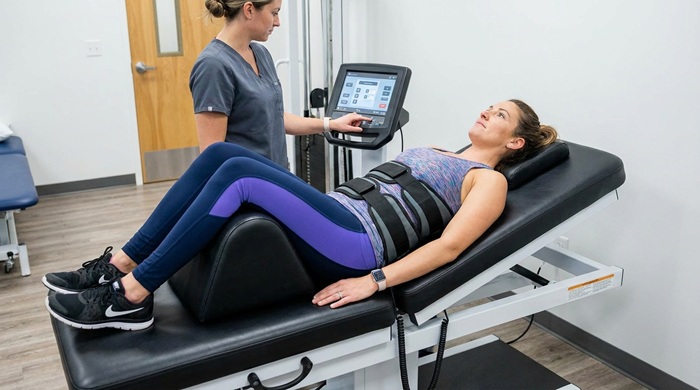
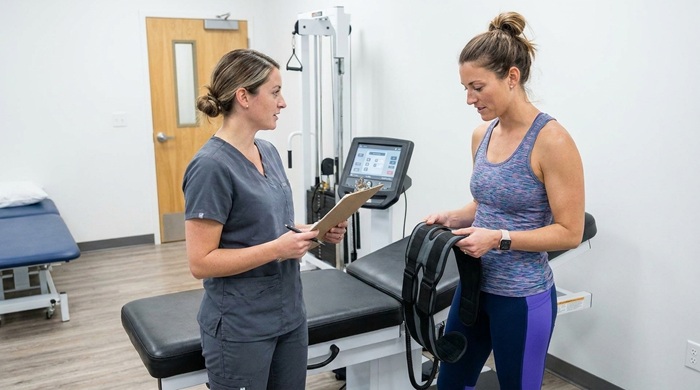
Spinal decompression therapy works by applying precise, controlled traction to the spine using a motorized table.
The table generates a gentle pulling force that separates the vertebrae above and below the affected disc. This creates a drop in intradiscal pressure, the pressure inside the disc space.
That pressure drop does two clinically important things.
First, it creates a retraction effect. The negative pressure acts like a vacuum, encouraging the bulging material to draw back toward the center of the disc and away from the nerve root it was compressing. As the disc retracts, the pressure on the nerve is reduced and symptoms begin to improve.
Second, it restores the disc's nutritional environment. Discs have no direct blood supply. They depend entirely on a process called imbibition, where fluid, oxygen, and nutrients are pulled in through diffusion when the disc is decompressed. A disc that is constantly compressed is being slowly starved. Decompression restores that exchange and creates the conditions for actual healing.
Each session is comfortable and typically lasts 30 to 45 minutes. The table alternates between periods of distraction and relaxation, which produces a pumping effect that is more effective than sustained traction alone.
What Decompression Is Combined With for Best Results
Spinal decompression works best as part of a coordinated care plan. At Arizona Chiropractic & Spine Rehabilitation, Dr. Heaton combines it with complementary treatments based on what each patient's injury requires.
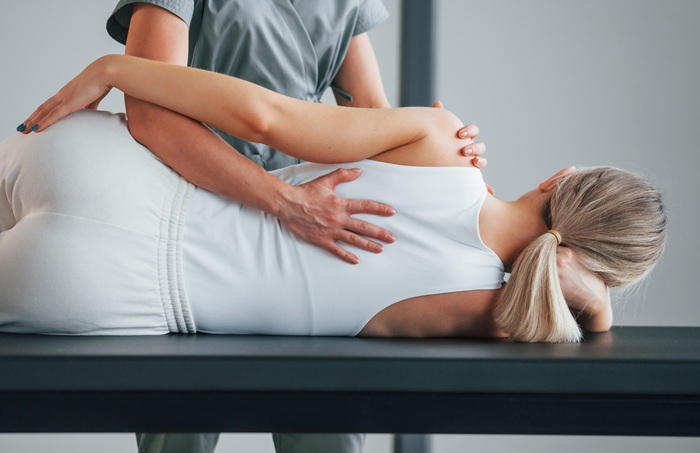
- Chiropractic adjustments restore proper movement in the spinal joints surrounding the disc injury. When the joints above and below a damaged disc are restricted, they amplify the load on the disc. Restoring their function reduces that load and supports decompression.
- Infrared cold laser therapy reduces inflammation in the disc and surrounding soft tissue and promotes cellular repair. It is particularly useful for accelerating the healing of the annulus fibrosus, the outer ring of the disc that was damaged in the crash.
- Electrical muscle stimulation reduces the protective muscle guarding that develops around a disc injury. This guarding is the body's way of protecting the damaged area, but it also compresses the disc further. Relieving it makes decompression more effective.
- Rehabilitation exercises build the core and spinal stability needed to protect the recovering disc after treatment ends. Without this step, patients are vulnerable to re-injury when they return to normal activity levels.
Is Spinal Decompression Right for Your Injury?
Decompression is well-suited for most bulging and herniated disc presentations, but it is not appropriate for every situation.
It is generally indicated for patients with disc-related nerve compression, radiculopathy (radiating arm or leg pain), sciatica from a lumbar disc, and cervical disc injuries producing arm symptoms.
It is generally not recommended for patients with spinal fractures, severe osteoporosis, spinal instability from ligament damage, or certain other structural conditions. A thorough evaluation determines whether decompression is the right tool for your specific injury.
Dr. Heaton will review your accident details, your symptoms, any available imaging, and a physical examination before recommending a course of treatment. Nothing is assumed. Everything is based on what your evaluation actually shows.
What the Research Supports
Conservative, non-surgical care for disc injuries is strongly supported by clinical evidence and guidelines.
The National Institute of Arthritis and Musculoskeletal and Skin Diseases identifies disc injuries as a significant cause of back pain and notes that conservative care, including hands-on treatment approaches, is the appropriate first-line response before considering surgery. Their guidance is consistent with the clinical position that most disc injuries, including those from trauma, can and should be addressed non-invasively first.
For auto accident victims specifically, addressing disc injuries early through targeted non-surgical treatment produces better long-term outcomes than passive rest or delayed intervention. The disc's capacity to heal is real, but it depends on reducing the compressive environment that is preventing recovery.
Get an Evaluation in Tucson, AZ
If you were in a car accident and are dealing with back pain, neck pain, sciatica, or radiating arm or leg symptoms, a bulging or herniated disc may be involved.
The only way to know for certain is a proper evaluation. Arizona Chiropractic & Spine Rehabilitation is at 601 N Craycroft Rd, Tucson, AZ 85711.
Call (520) 600-3300 or request an appointment online.
At Arizona Chiropractic in Tucson, our mission is not only to help you recover from pain, but also to educate and empower you with the tools to maintain long-term health and wellness.
Quick links
Office Hours
Monday | 8AM - 6PM
Tuesday | 8AM - 6PM
Wednesday | 8AM - 6PM
Thursday | 8AM - 6PM
Friday | 9AM - 1PM
Saturday & Sunday | Closed
Get In Touch
601 N Craycroft Rd
Tucson, AZ 85711
Copyright © 2026 Arizona Chiropractic & Spine Rehabilitation