




601 N Craycroft Rd
Tucson, AZ 85711

Posture Correction and Why It Is More Than Just Standing Up Straight
Most people think about posture the way they think about flossing. They know it matters, they do not do it consistently, and they feel mildly guilty about it. But poor posture is not just a habit. Over time it becomes a structural problem, and structural problems do not fix themselves with reminders to sit up straight.
If you are looking for treatments for posture correction, understanding the mechanics first helps you make better decisions about your care.
This article covers what poor posture actually does to your body, the problems it creates over time, and what real correction involves.
What Poor Posture Is Actually Doing to Your Spine
Your spine has three natural curves: a forward curve in the neck, a backward curve in the mid back, and a forward curve in the lower back.
These curves work together to distribute body weight evenly and absorb shock efficiently.
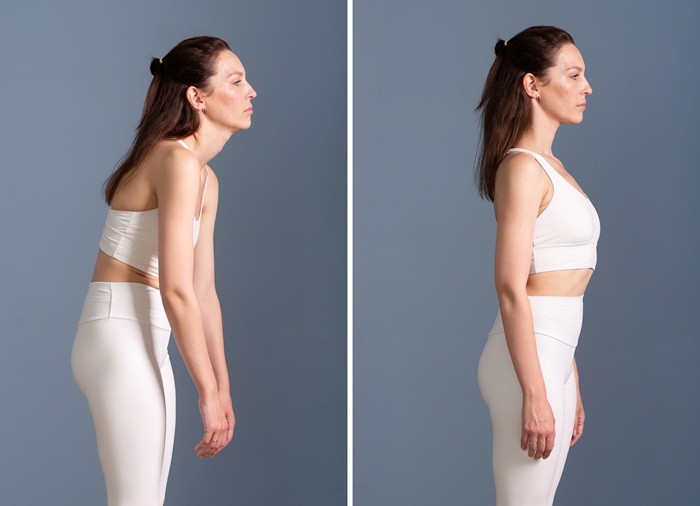
When posture breaks down, those curves change. The head drifts forward. The shoulders round. The mid back flattens or hunches.
Each change shifts load onto structures not built to carry it. That accumulation over months and years is what drives the pain people eventually seek help for.
For every inch your head moves forward, the effective weight on your cervical spine increases by roughly 10 pounds.
A head that naturally weighs 10 to 12 pounds can place 40 to 50 pounds of load on the neck when it sits several inches forward. That kind of sustained stress does not produce sudden symptoms. It produces slow, grinding deterioration.
The Conditions That Poor Posture Directly Causes or Worsens
Poor posture is not just associated with aches and pains. It is a mechanical driver of several specific conditions that show up regularly in chiropractic practice.
- Neck pain and cervical tension — Forward head posture places excessive load on the cervical facet joints, compresses discs, and chronically overloads the muscles at the base of the skull. This is one of the most common presentations in office workers and anyone who spends significant time at a screen.
- Tension headaches — The suboccipital muscles at the base of the skull are under constant strain with forward head posture. When these muscles stay tight for long enough, they refer pain upward into the skull, producing headaches that feel like pressure or a band around the head. These headaches are structural in origin and respond well to treatment targeting the cervical spine.
- Shoulder pain and impingement — Rounded shoulders narrow the subacromial space, the gap through which tendons pass when you lift your arm. Over time this produces irritation and inflammation in the rotator cuff, making overhead movements painful and eventually limiting range of motion.
- Mid and lower back pain — When the thoracic spine loses its natural curve and the lumbar spine compensates, the posterior facet joints and intervertebral discs in the lower back take on disproportionate load. This is a significant contributor to the chronic lower back pain that affects such a large portion of the adult population.
- Sciatica — Poor posture can contribute to disc herniation or lumbar joint irritation that places pressure on the sciatic nerve. Prolonged sitting with a flat or flexed lumbar spine is particularly damaging to the posterior disc wall over time.
- Hand numbness and tingling — Rounded shoulders and forward head posture can compress the nerves that travel from the cervical spine through the shoulder and down the arm. Numbness, tingling, or weakness in the hands is sometimes the first sign that postural changes have begun to affect nerve function.
The average adult sits for more than 9 hours per day. Sitting places significantly more compressive load on the lumbar discs than standing, and most people do not sit in neutral spinal alignment. They sit in flexion, with the lower back rounded, for hours at a time.
This is one of the primary reasons disc degeneration, lower back pain, and neck problems are so prevalent. The human spine was not designed for sustained static loading in a flexed position. But that is exactly what most modern daily life asks of it.
Why Telling Yourself to Sit Up Straight Does Not Work
The instinct when noticing poor posture is to consciously correct it. Pull the shoulders back. Sit up straight. Tuck the chin. This works for about thirty seconds.
Posture is not primarily a conscious behavior. It is determined by the underlying structure.
When joints are restricted and muscles have shortened adaptively, no amount of intention changes that. The nervous system has established a new default, and willpower cannot override it.
You can force your body into a better position temporarily, but the moment your attention shifts, the underlying pattern reasserts itself. Sustainable posture improvement requires addressing the structural causes, not just the surface behavior.
What Actual Posture Correction Involves
Real posture correction works at three levels simultaneously: the joints, the soft tissue, and the neuromuscular system. Each requires a different approach.
- Joint mobility. Restricted spinal joints lock the spine into poor alignment. Chiropractic adjustments restore proper movement in the cervical and thoracic spine, giving the body the mechanical capacity to hold better alignment.
- Disc health. Years of poor posture can cause disc thinning or herniation. Spinal decompression therapy creates negative pressure within compressed discs, encouraging rehydration and reducing nerve irritation.
- Muscle retraining. Weakened postural muscles need to be rebuilt. Shortened muscles need to be lengthened. Rehabilitation therapy addresses both with targeted exercises specific to your postural pattern.
- Muscle spasm relief. Electrical muscle stimulation relieves chronic tension around posturally stressed joints, making the spine more accessible to adjustment and rehab work.

How a Chiropractic Assessment Identifies Your Specific Postural Pattern
Not all poor posture looks the same. Forward head posture is different from thoracic hyperkyphosis. An anterior pelvic tilt creates different problems than a flat back.
Before treatment begins, Dr. Heaton will assess your posture from multiple angles, evaluate joint mobility, and identify which muscles are overworking and which are underperforming.
A plan built for one postural pattern will not work for another. Precision in assessment is what makes correction possible.
How Long Does Posture Correction Take?
This is the question most people ask, and the honest answer is: it depends on how long the problem has been there.
Postural changes from the past few months tend to respond relatively quickly. Changes that have accumulated over years, including disc changes and adaptive muscle shortening, take longer.
A realistic expectation for most adults is several months of combined clinical care and daily habit change. The clinical side addresses structural drivers. The habit side maintains the gains.
Progress is tracked objectively at each visit so you can see what is actually changing, not just feel it.
What You Can Do Between Visits
Clinical care does the heavy lifting, but daily habits determine whether the improvements hold. Here are the most impactful things you can do outside of your appointments.
- Set your screen at eye level. The single most effective ergonomic change for most people. A screen that sits below eye level guarantees forward head posture for every minute you use it. Raise your monitor or laptop so the top third of the screen is at eye level.
- Take movement breaks every 30 to 45 minutes. Sustained static posture, even good posture, loads the spine. Short breaks to stand, walk, or stretch interrupt the compressive cycle and allow the discs and muscles to recover. A brief walk to get water is enough.
- Strengthen your posterior chain. The muscles of the upper back, mid back, and glutes are almost universally weak in people with postural problems. Rows, face pulls, and hip extension exercises done consistently make a meaningful difference in resting posture over time.
- Stretch your chest and hip flexors. These are the muscles that adaptively shorten with prolonged sitting and pull the body into poor alignment. A simple doorframe chest stretch and a kneeling hip flexor stretch done daily help counteract hours of sitting.
- Check your sleeping position. Sleeping on your stomach is the worst position for cervical and lumbar alignment. Side sleeping with a pillow that keeps your head level, or back sleeping with a pillow under your knees, allows the spine to rest in better alignment overnight.
- Be mindful when looking at your phone. Looking down at a phone produces the same forward head loading as poor desk posture. Raising the phone to eye level when using it is a simple habit that reduces cervical load significantly over the course of a day.

When Posture Problems Have Already Caused Pain
If your posture has already produced regular neck pain, back pain, or headaches, daily habits alone are not enough.
Pain means the structural changes have crossed a threshold. The joints, discs, and soft tissues need direct clinical attention before self-care work can be fully effective.
Most posture-related pain responds well to chiropractic care, even when it has been present for a long time.
What the Research Says
The connection between postural deviation and musculoskeletal pain is well supported in the clinical literature.
The National Center for Complementary and Integrative Health recognizes spinal manipulation as an evidence-supported intervention for the neck and back pain conditions that poor posture commonly drives.
The National Institute of Arthritis and Musculoskeletal and Skin Diseases identifies sustained posture and sedentary behavior as significant risk factors for back pain, noting that conservative hands-on care is appropriate before more invasive options.
The National Institute for Occupational Safety and Health identifies awkward and static postures as primary workplace risk factors for musculoskeletal disorders.
Getting Started in Tucson, AZ
If you have been noticing changes in your posture or dealing with pain you suspect is posture-related, a chiropractic evaluation is the right first step.
Dr. Heaton will assess your posture, identify what is driving it, and build a plan specific to what he finds. No generic protocol.
Arizona Chiropractic & Spine Rehabilitation is at 601 N Craycroft Rd, Tucson, AZ 85711.
Call (520) 600-3300 or request an appointment online.
At Arizona Chiropractic in Tucson, our mission is not only to help you recover from pain, but also to educate and empower you with the tools to maintain long-term health and wellness.
Quick links
Office Hours
Monday | 8AM - 6PM
Tuesday | 8AM - 6PM
Wednesday | 8AM - 6PM
Thursday | 8AM - 6PM
Friday | 9AM - 1PM
Saturday & Sunday | Closed
Get In Touch
601 N Craycroft Rd
Tucson, AZ 85711
Copyright © 2026 Arizona Chiropractic & Spine Rehabilitation